the tonnetz
A diagram from the 1800s that arranges the twelve notes so every neighbour is harmonically related. Fifths one way, thirds another. Chords are triangles. It is a map of harmony — and the TZ4 is that map, printed in light.
 kickstarter ↗
Patchwork Instruments · TZ4 · Kickstarter soon
“see your music think.”
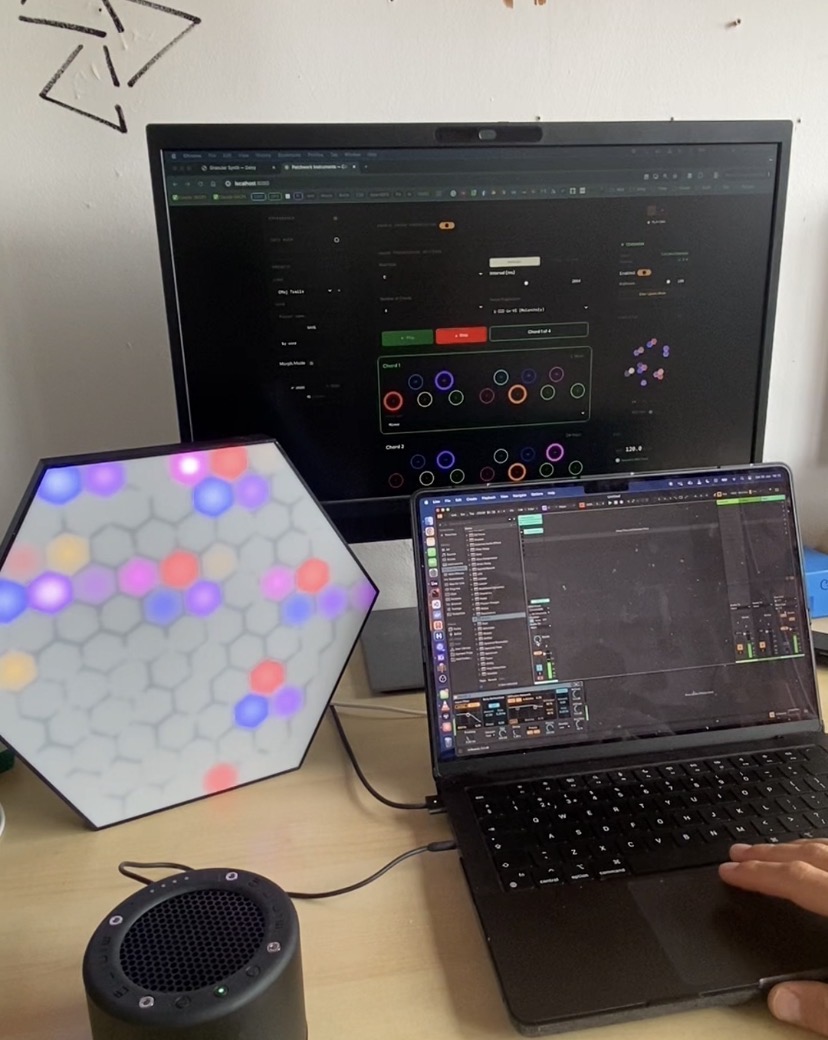
TZ4 is a hexagonal LED panel that composes evolving melodies with cellular automata — arranged on the Tonnetz, a 19th-century map of harmony. Plug it into any DAW over USB-C. Pick a scale. Watch it think.
the same engine, free in your browser — no hardware required to start.
click the lattice — every cell is a note
01 · how it works
A diagram from the 1800s that arranges the twelve notes so every neighbour is harmonically related. Fifths one way, thirds another. Chords are triangles. It is a map of harmony — and the TZ4 is that map, printed in light.
Conway’s Game of Life, for music. Cells are born and die by counting their neighbours. Constrained to your chosen scale, the colony writes melodies that emerge from the rules — never twice the same.
Class-compliant USB MIDI. No drivers, no app store, no account. Plug into macOS, Windows or Linux and it appears as a MIDI device — a generative melody source for any DAW, any synth, any voice you own.
02 · the instrument
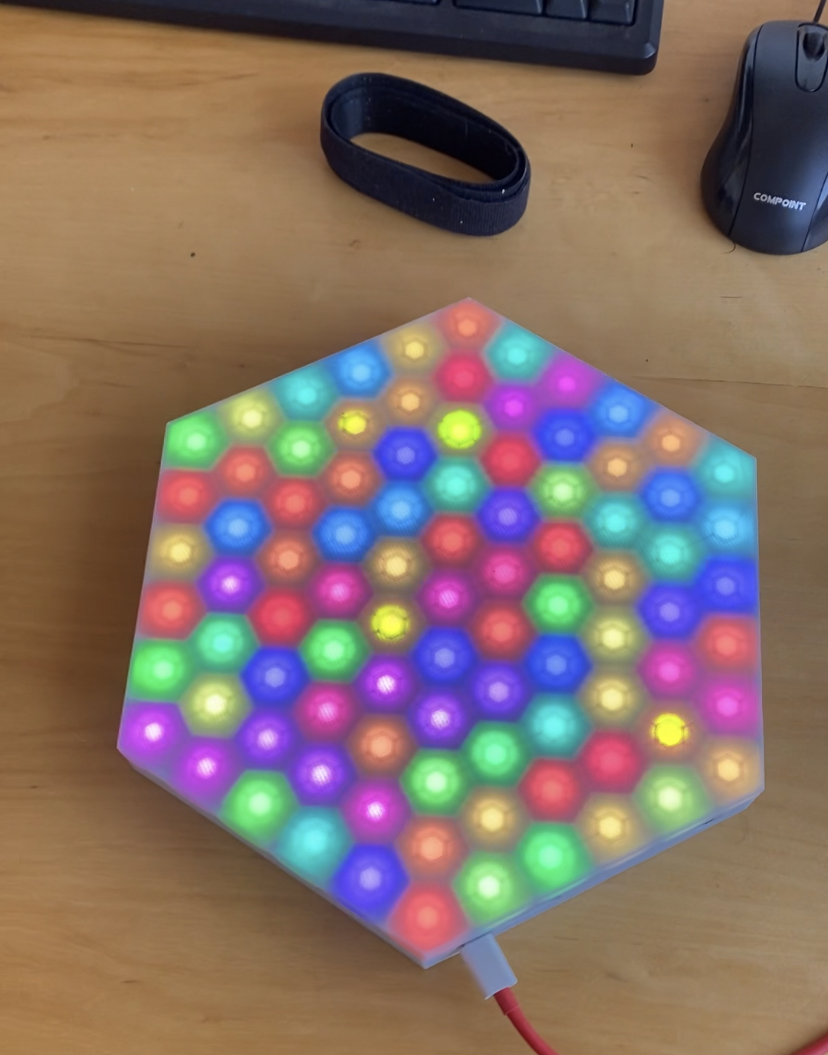
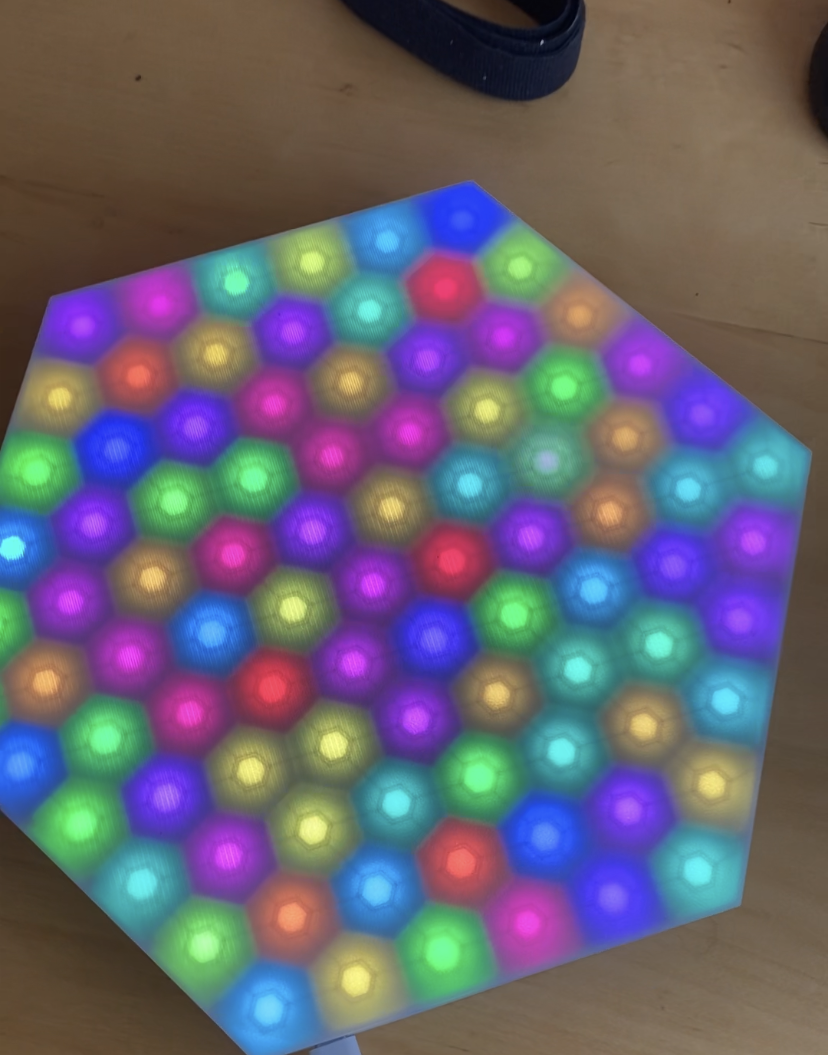
03 · the anatomy
0.5 mm diffuser — where LEDs become glow
5 mm honeycomb — 91 cells, zero bleed between notes
CNC case — the brain on the back, USB-C out
geometry from the production STEP files — nothing staged.
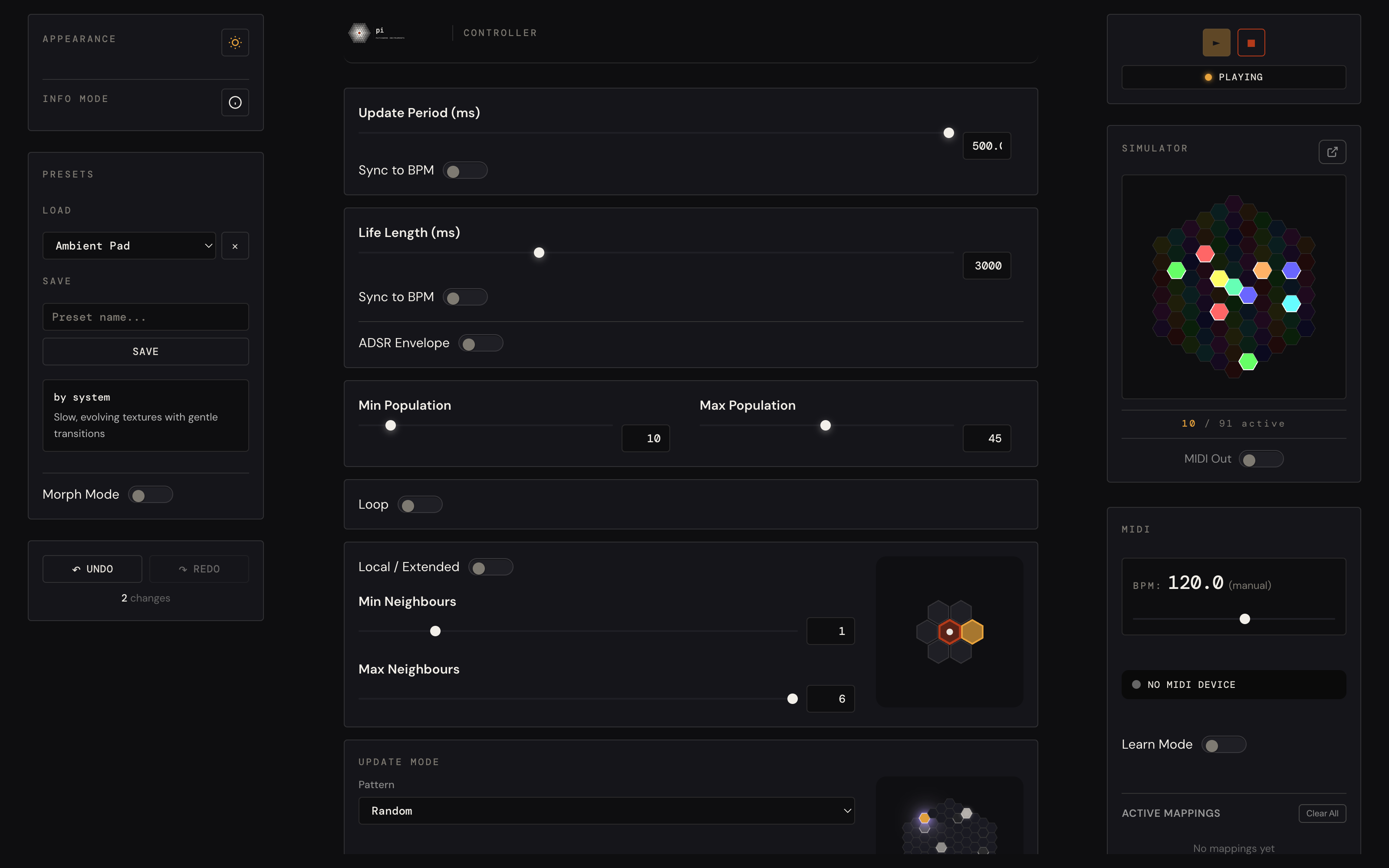
04 · the control panel & simulator
05 · the story
I’m Tom, an engineer from Bristol. This started because I couldn’t play music — and refused to let that stop me. I saw how Hans Zimmer and Radiohead scored Blue Planet II: an orchestra given one rule — play the note, but stop if your neighbour is playing. An ocean of organic sound. I wanted to build that out of electronics.
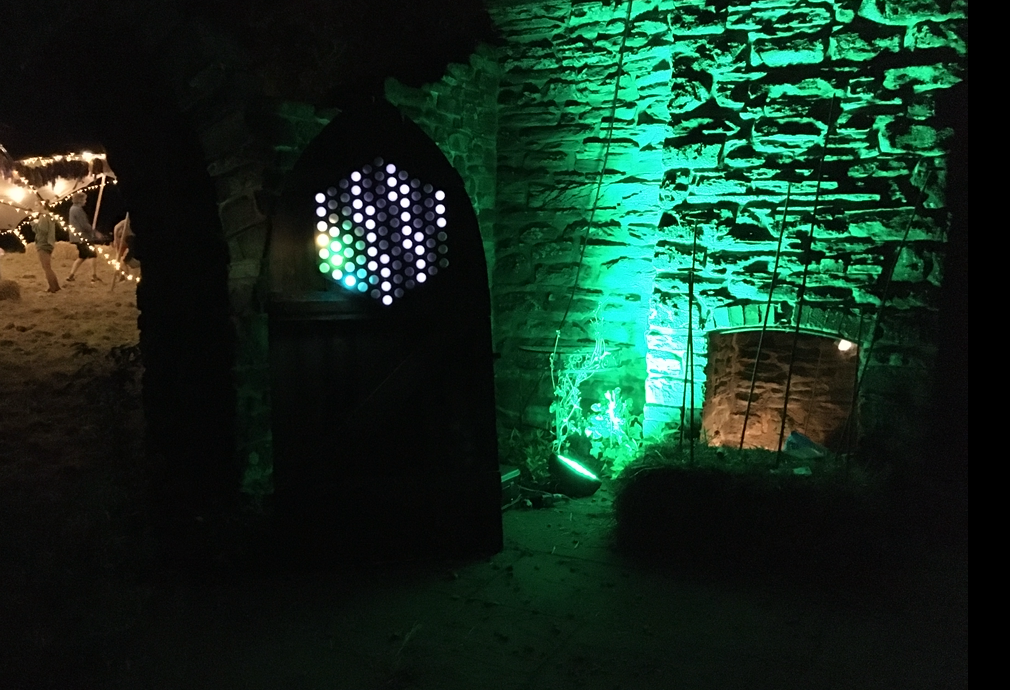
The search led through Conway’s Game of Life to the Tonnetz, and the first prototype was cardboard with LEDs poked through holes. It worked. Eleven prototypes later there are custom PCBs, CNC cases, a 3-metre suspended MegaHex, 50 boards shipped to an installation in Venice — and mates who can’t read a note of music, jamming for hours.
The Tonnetz taught me music theory — not from a textbook, but from watching light move. It meets you where you are.
— Tom · Bristol, UK
06 · the campaign
The TZ4 MIDI panel is phase one. Back it at launch and you’re backing the person who will personally build and ship your unit. Phase two — the TZ7, with capacitive touch — follows on this same page.
Notify me on Kickstarter ↗est. delivery Q1 2027 · UK · EU · US · CA · AU · JP · KR
faq
No — that’s the point. Pick a scale and everything the panel generates is harmonically valid. Use it for a while and the theory arrives by itself, through colour and pattern. It taught me almost everything I know.
No. TZ4 outputs MIDI over USB-C. Your DAW or synth turns the notes into sound — any voice you own becomes the orchestra.
Anything with a MIDI input: Ableton Live, Logic, FL Studio, Bitwig, Reaper, GarageBand, hardware synths with USB host. macOS, Windows and Linux — class-compliant, no drivers.
You set the scale, root, automaton rules, speed, population, looping and chord progressions. You shape the system rather than program notes — more conducting than composing.
A free browser version of the same engine, with full MIDI output. Try it now, no signup. The physical panel takes it off the screen and onto your desk — a real fire instead of a fireplace video.
The firmware will be open source, and updates arrive over USB.